

All the light
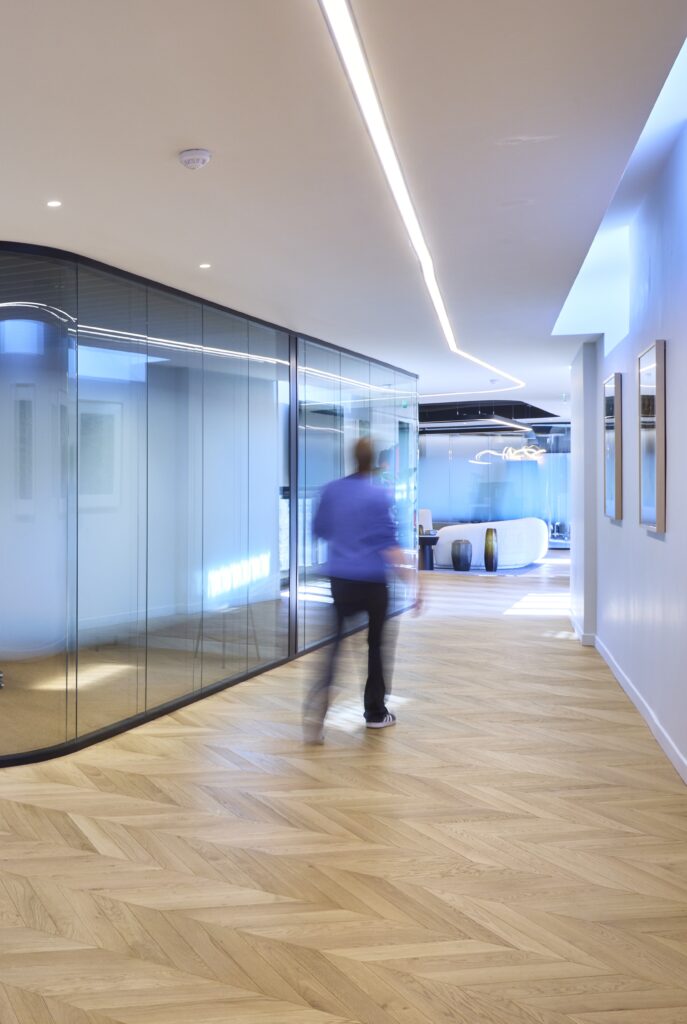 All the light
In contrast to architecture, interior design in the commercial and service sectors has long tended to think of light spontaneously in its artificial form. The permanent lighting of offices and stores, guaranteed at any time of day and in any weather, formed a solid postulate. Light that was docile, available and constant, adjustable and directional, satisfied an infinite number of situations. It even revealed the highly technical art of "lighting ambience".
Some of these needs, for which there is no substitute for electricity, obviously remain. But today, environmental and societal awareness, the need for ecology and energy efficiency, and concern for health and well-being in the workplace have all grown significantly.
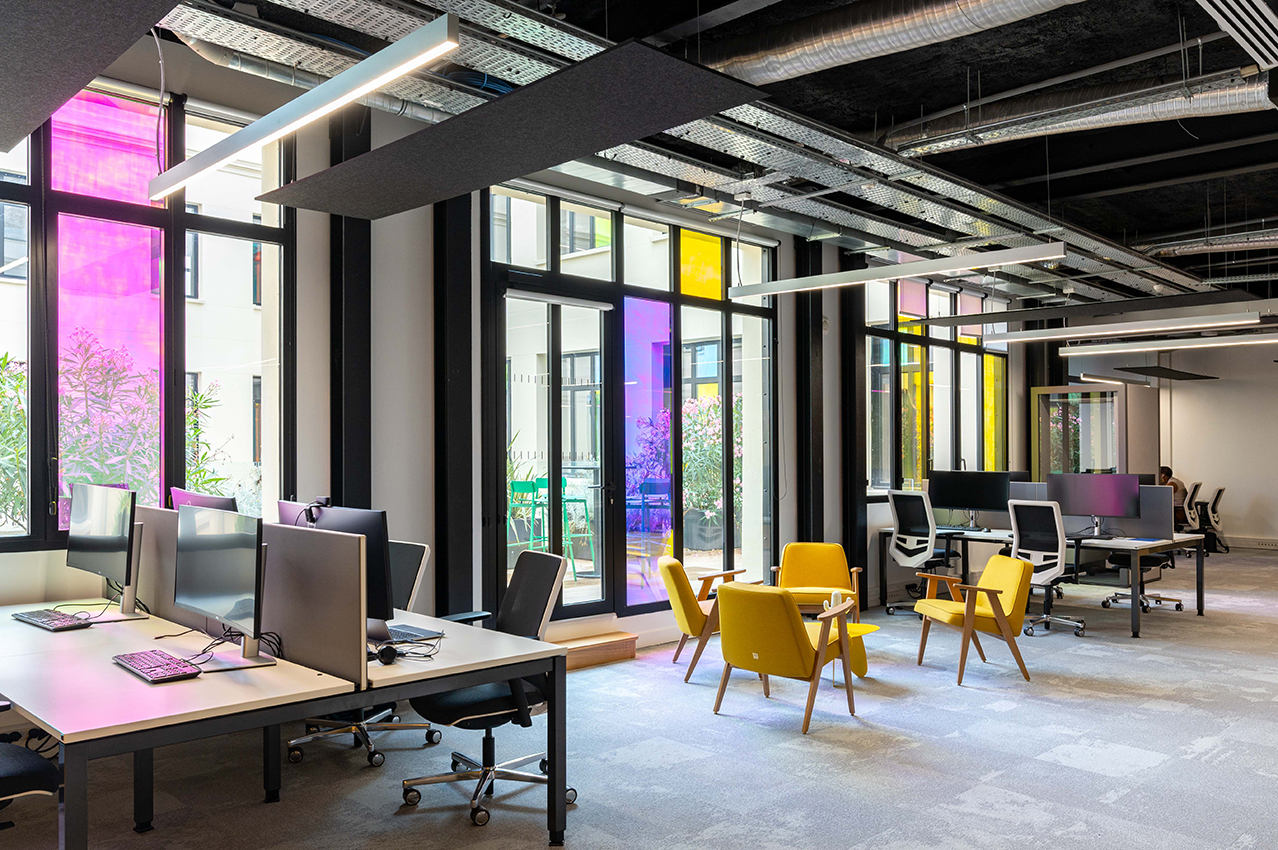
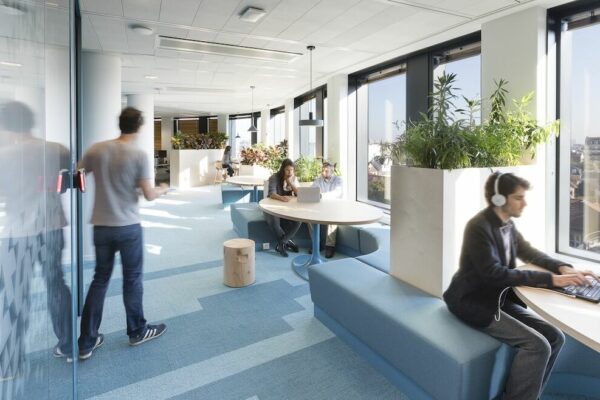
As a direct consequence, we have made natural light a priority in our design approaches. An indirect but essential consequence is the re-hierarchization of spaces and functions. Historically, the most noble functions, such as reception, meetings and management, were obviously on display. The more mundane, such as corridors, group work areas, cafeterias, etc., had to make do with a second day, compensated for by a profusion of lighting fixtures, a central item of expenditure in the works budget. This changeover took place over 20 years ago in the United States, where the depth of floors reaches 30 to 40 meters, compared with less than 20 meters in France.
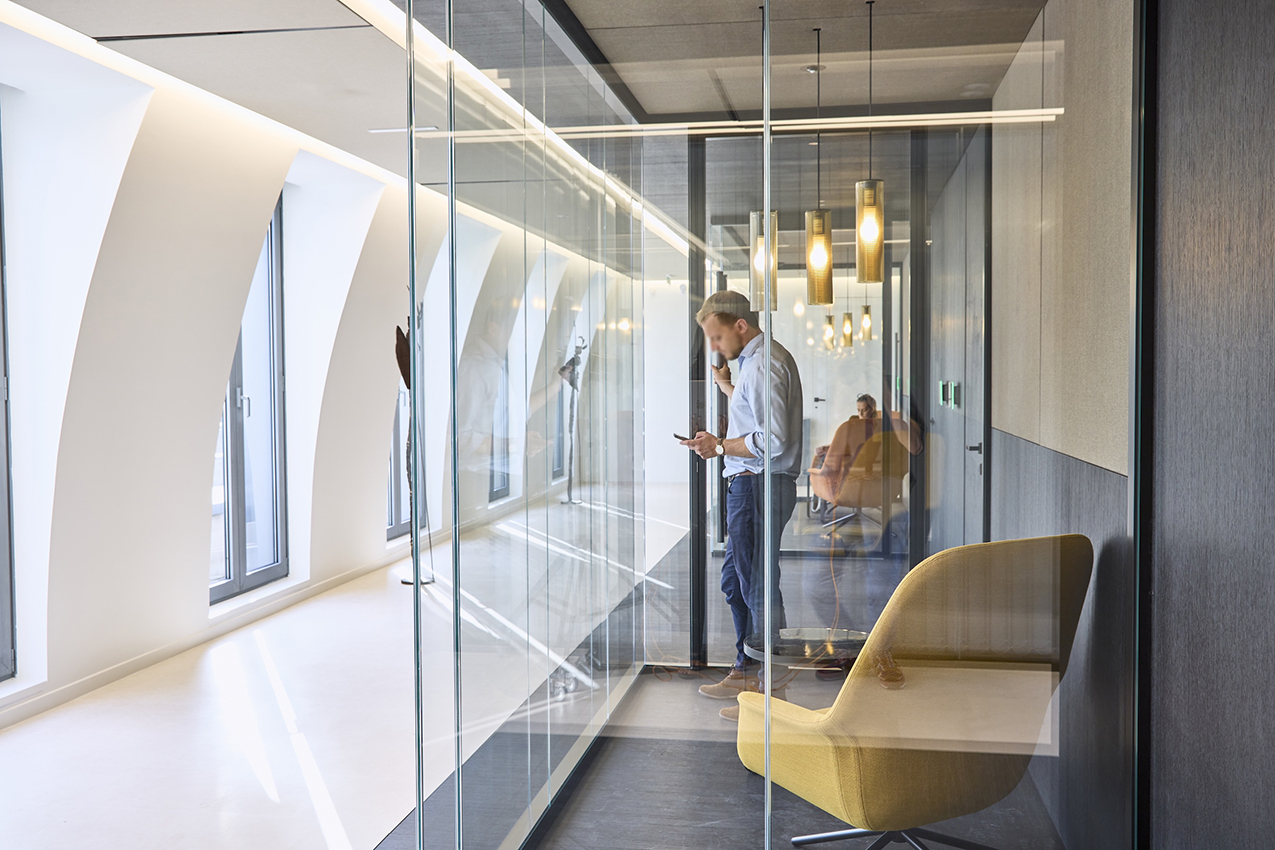
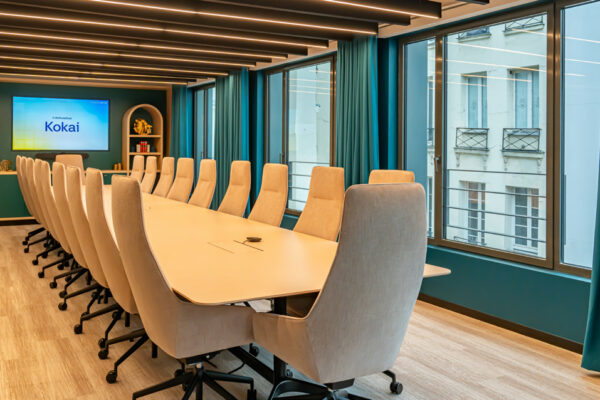
Access to natural daylight for the most frequently used spaces reshuffles the deck in space planning. Gone are the days of artificially lit workstations, corridors, restaurants and phone boxes; welcome to meeting rooms with controlled lighting, ideal for video-projections and videoconferences. This general recomposition of the workspace immediately generates a unanimous feeling of pleasure among users, which they struggle to explain. Like a return to the obvious.
Why is this? Because natural light, with its infinite range of variations, reconnects people to their external environment, to the city and to time. The passage of time and the weather. Interior architecture simply lets it in through the windows.